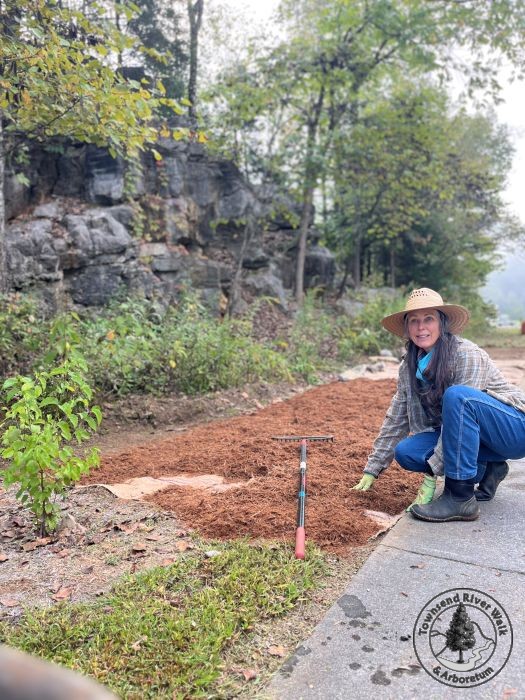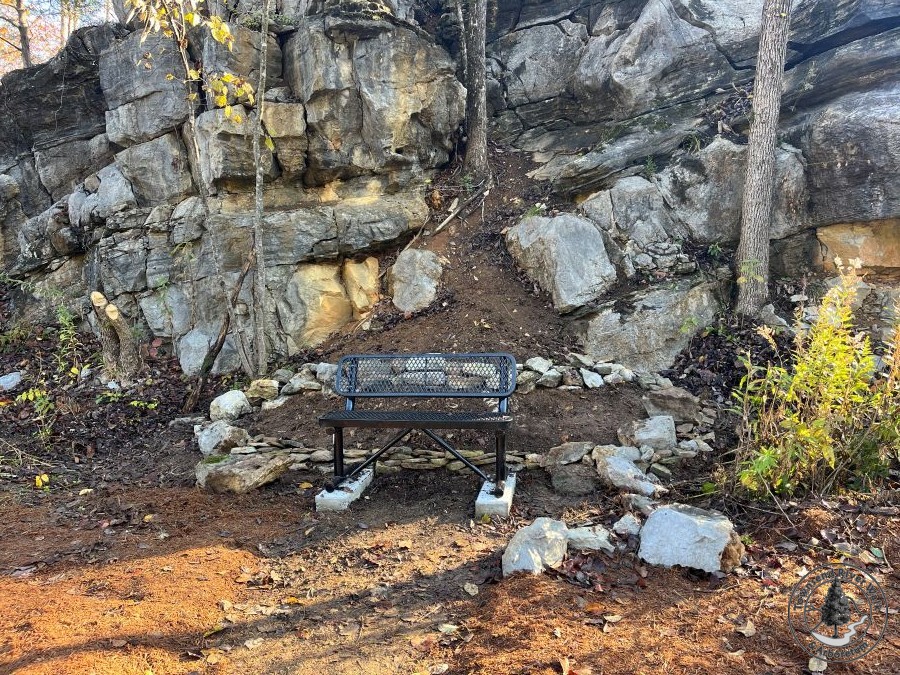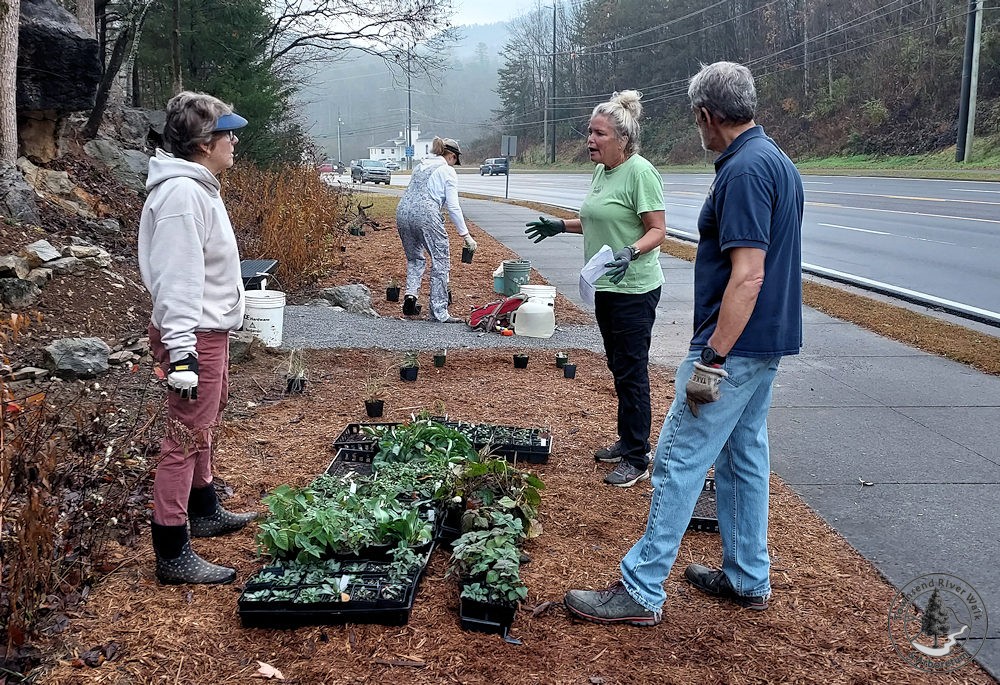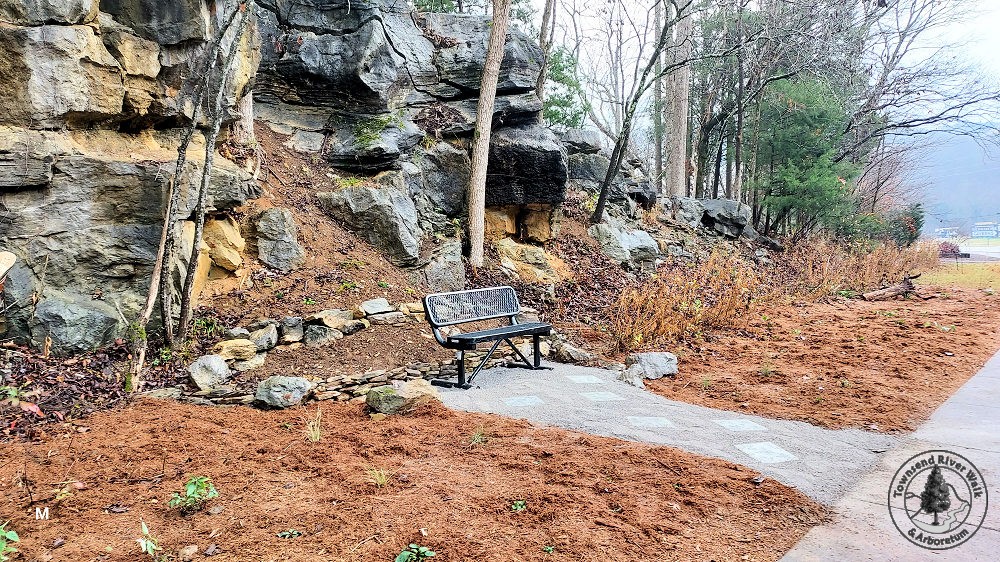
 The "Rock" Native Pollinator Garden Before - 2025.09.08 and After - 2025.11.21.
This project was an addon project for 2025 that was started in September of that year.
This wonderful garden was privately funded with a generous donation and is dedicated in the honor of Norma K. Smith.
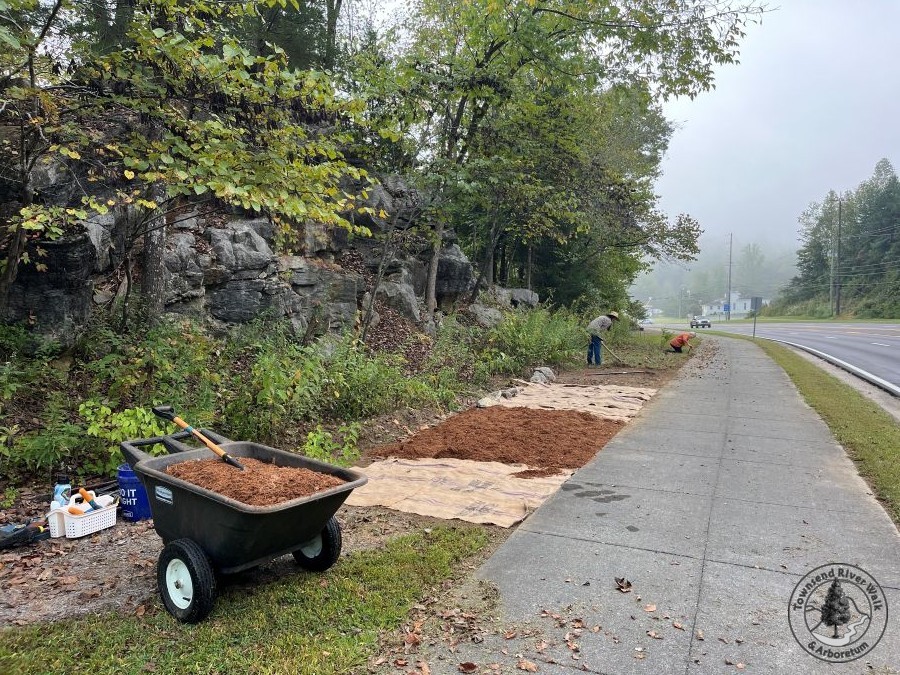
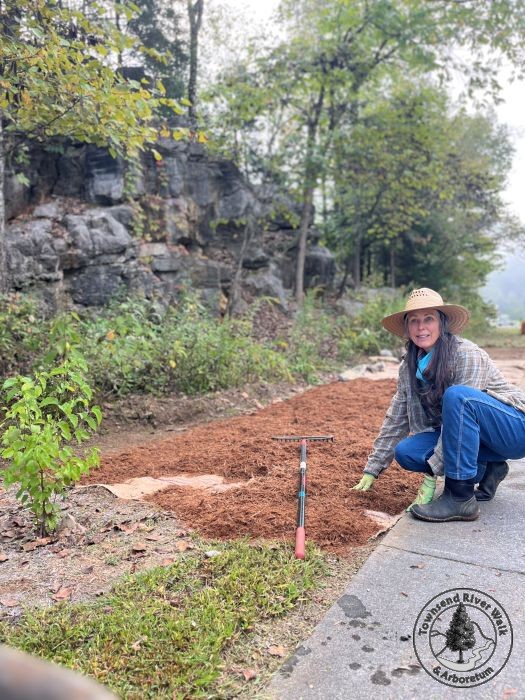
Named The "Rock" Pollinator Garden due to the beautiful rock formation behind it. This native pollinator garden it is approximately 80 ft long and 8 ft wide.
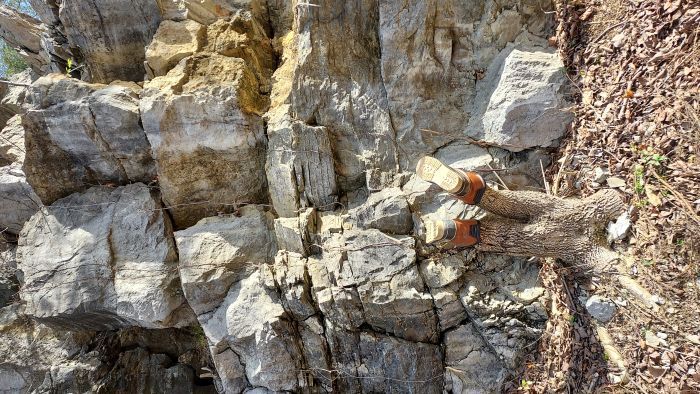 Some of our creative volunteers, used the rooted trunk of a tree we had cutback, to create this masterpiece.
Take a look at the progression of the garden through the 3 plus months it took to create.


The list of plants were as follows (information taken from North Carolina State Extension Service (https://plants.ces.ncsu.edu/):
| Botanical Name | Common Name | Wildlife Value |
|---|---|---|
| Monarda punctata | Spotted Beebalm | Attracts bees, butterflies, moths, and hummingbirds. Ruby-throated hummingbirds and butterflies nectar from the blooms. Members of the genus Monarda support the following specialized bees: Dufourea monardae, Perdita (Perdita) gerhardi, and Protandrena abdominalis. This is a host plant for the Gray Marvel Moth, Anterastria teratophora, and the Snout Moth, Pyrausta generosa and P. signatalis. |
| Rudbeckia fulgida | Orange Coneflower | This plant provides nectar for pollinators. It is a larval host plant to Wavy-lined Emerald (Synchlora aerata) and to Silvery Checkerspot (Chlosyne nycteis) which has one brood in the north and two broods from May-September in the rest of its range. Songbirds, especially American goldfinches, eat the seeds in the fall. |
| Penstemon canescens | Eastern Grey Beardstongue | It is a host plant for the Common Buckeye butterfly. Hummingbirds, butterflies and other pollinators are attracted to the blooms. Members of the genus Penstemon support the following specialized bee: Osmia (Melanosmia) distincta. |
| Monarda didyma | Scarlet Beebalm | Attracts bumblebees, swallowtail butterflies, and Ruby-throated hummingbirds. It is a larval host to the hermit sphinx, orange mint moth, and the raspberry pyrausta. Members of the genus Monarda support the following specialized bees: Dufourea monardae, Perdita (Perdita) gerhardi, and Protandrena abdominalis. Dead stems are used by stem-nesting bees. |
| Yucca filamentosa | Adam’s Needle/Yucca | Mutualistic relationship with the small white yucca moth. Hummingbirds visit the flowers. Larval host for Yucca Giant-Skipper and Cofaqui Giant-Skipper. |
| Chrysopsis mariana | Pink Muhly Gras | Attracts butterflies. |
| Eryngium yuccifolium | Rattlesnake master | Attracts pollinator insects including wasps, flies, bees, and butterflies like monarchs and skippers. Soilder beetles eat the pollen. The rattle snake master stem-borer moth Papaipema eryngii) uses the plant as a larval host. |
| Penstemon digitalis | Foxglove Beardstongue | This plant attracts birds, hummingbirds, bees, butterflies, and other pollinators. Members of the genus Penstemon support the following specialized bee: Osmia (Melanosmia) distincta. |
| Monarda fistulosa | Wild Bergamot | Attracts bees, butterflies, and hummingbirds. Ruby-throated hummingbirds and butterflies nectar from the blooms. Members of the genus Monarda support the following specialized bees: Dufourea monardae, Perdita (Perdita) gerhardi, and Protandrena abdominalis. Dead stems are used by stem-nesting bees. |
| Monarda clinopodia | White Bergamot | Attractive to bees, bumblebees, butterflies, and hummingbirds for nectar and pollination. |
| Chrysopsis mariana | MD Golden Aster | Members of the genus Chrysopis support the following specialized bees: Andrena (Callandrena s.l.) fulvipennis, and Perdita (Hexaperdita) boltoniae. This plant attracts butterflies, bees, and pollinators. |
| Senna hebecarpa | Wild Senna | Bumblebees are attracted to pollen. Birds enjoy the seeds particularly Bobwhites. Larval host plant of various types of Sulphur butterflies. Insects like ladybird beetles, ants and flies eat the nectar at the glands found at the base of the petioles because the flowers are nectar-less. |
| Symphyotricum oblongifolium | Aromatic Aster | Members of the genus Symphyotrichum support the following specialized bees: Andrena (Callandrena s.l.) asteris, Andrena (Callandrena s.l.) asteroides, Andrena (Cnemidandrena) hirticincta, Andrena (Cnemidandrena) nubecula, Andrena (Callandrena s.l.) placata, Andrena (Callandrena s.l.) simplex, and Colletes simulans. |
| Solidago caesia | Bluestem Goldenrod | This plant supports Wavy-lined Emerald (Synchlora aerata) larvae. Flowers are attractive to butterflies, bees, and other pollinators. Songbirds eat the seeds. Members of the genus Solidago support the following specialized bees: Andrena (Callandrena s.l.) asteris, Andrena (Callandrena s.l.) braccata, Andrena (Cnemidandrena) canadensis, Andrena (Cnemidandrena) hirticincta, Andrena (Cnemidandrena) nubecula, Andrena (Callandrena s.l.) simplex, Perdita (Perdita) octomaculata, Melissodes (Eumelissodes) fumosus, Colletes simulans, and Colletes solidaginis. |
| Echinacea tennesseensis | TN Coneflower | This plant supports Wavy-lined Emerald (Synchlora aerata) larvae. Flowers attract birds and butterflies. Finches will eat the seeds. |
| Echinacea purpurea | Purple Coneflower | Its flowers are attractive to bees, butterflies and other pollinators. This plant supports Silvery Checkerspot (Chlosyne nycteis) larvae which has two broods from May-September. The adults feed on nectar from red clover, common milkweed, and dogbane. This plant also supports Wavy-lined Emerald (Synchlora aerata) larvae. Songbirds, especially American goldfinches, eat the seeds. Dead stems are used by stem-nesting bees |
| Echinacea pallida | Pale Purple Coneflower: | Attracts hummingbirds, honey bees, bumblebees, butterflies and skippers. |
| Stokesia laevis | Stokes Aster | Butterflies and bumblebees are attracted by nectar at the blooms in the summer. |
| Rudbeckia sullivantii 'Goldsturm | Black-Eyed Susan "Goldsturm' | The flowers attract birds, butterflies, and bees. |